


Primary and secondary conversions in Google Ads determine how Smart Bidding optimizes performance and which metrics are used to evaluate the actual results of your campaigns.
How do they work in Google Ads?
In short, it is the event you are asking Google to replicate. If you are unsure whether to set an event as a primary conversion, ask yourself: Would I be okay with my entire budget going toward getting many events like this one?
In a Google Shopping or Performance Max (PMax) campaign, the ultimate goal is Return on Ad Spend (ROAS).
It is recommended to choose this type of strategy because counting the number of sales isn't enough; it's about assigning higher value to orders with a higher average order value (AOV). Ideally, you should also import offline conversions to track returns, exchanges, repeat purchases, etc. The more reliable signals we feed Google, the better and more predictable the results will be.
Primary Conversion (for bid optimization):
Secondary Conversions (for observation):
Note: These secondary conversions are often marked as primary when there isn't enough sales volume for Smart Bidding (around 30 per month) or when there are issues with tracking actual sales. However, keeping them secondary is the ideal setup.

In Search campaigns for lead generation (Lead Gen), the goal is to acquire high-quality contacts without wasting budget.
Primary Conversions (for bid optimization):
Note: This is an estimate and depends on the specific business. For example, if selling online class packages were viable and recurring, setting that as a primary conversion would be a great idea.
Secondary Conversions (for observation):
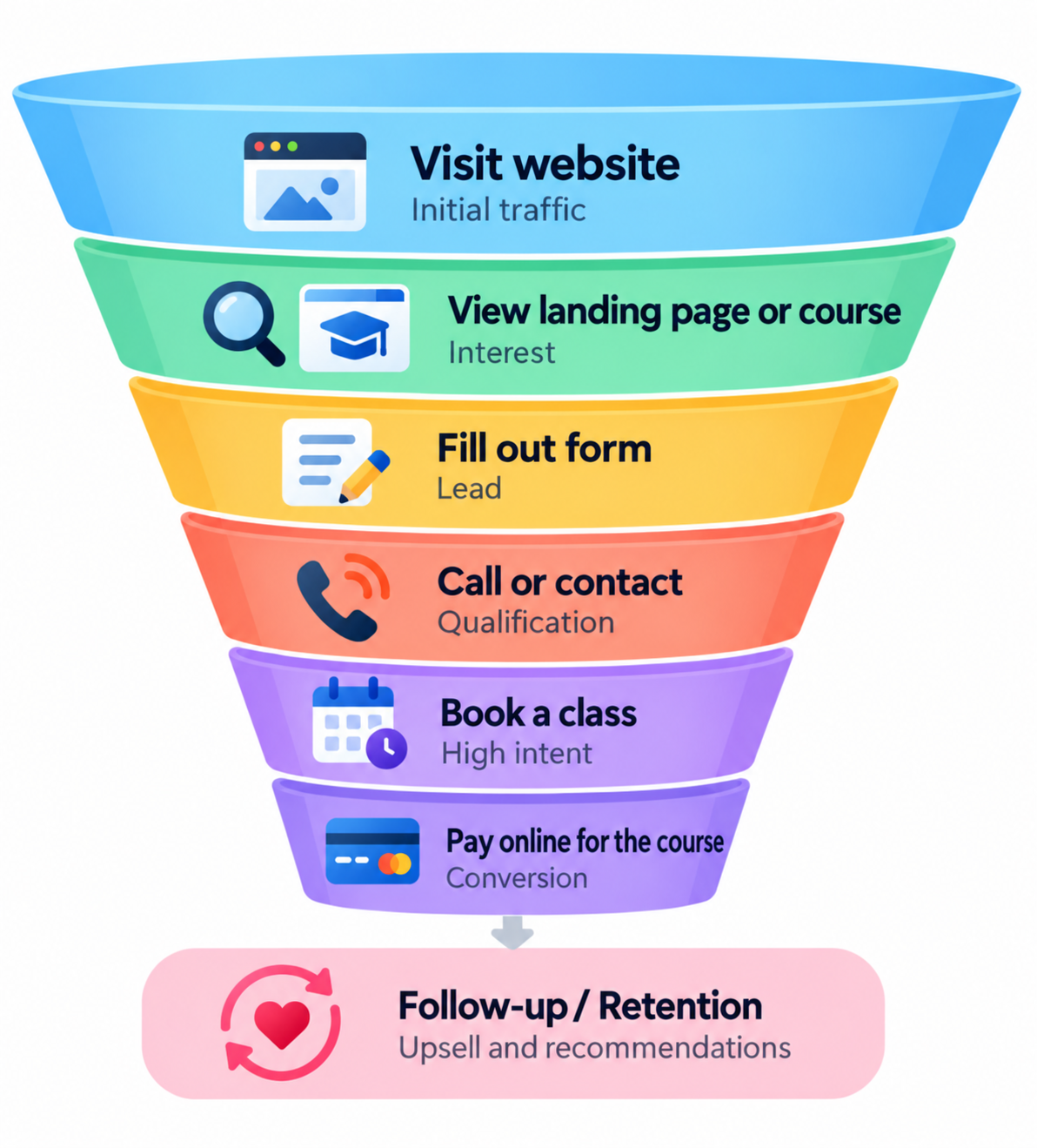
Always set the actions with the highest commercial value as primary to send a clear signal to the Smart Bidding algorithm. Keep interaction actions or intermediate funnel steps as secondary to use for remarketing audience creation and to assess the overall health of your ad funnel without miscalibrating your bids.

.svg)