


Cloud Words

Improve traffic quality in minutes, not hours.
Looking for a more efficient and professional way of traffic optimization? Analize your Search Terms in minutes, not hours.
Stop wasting hours and money adding new negative KeyWords. Manage your Search Terms much faster with Dolnai.
What's Cloud Words?
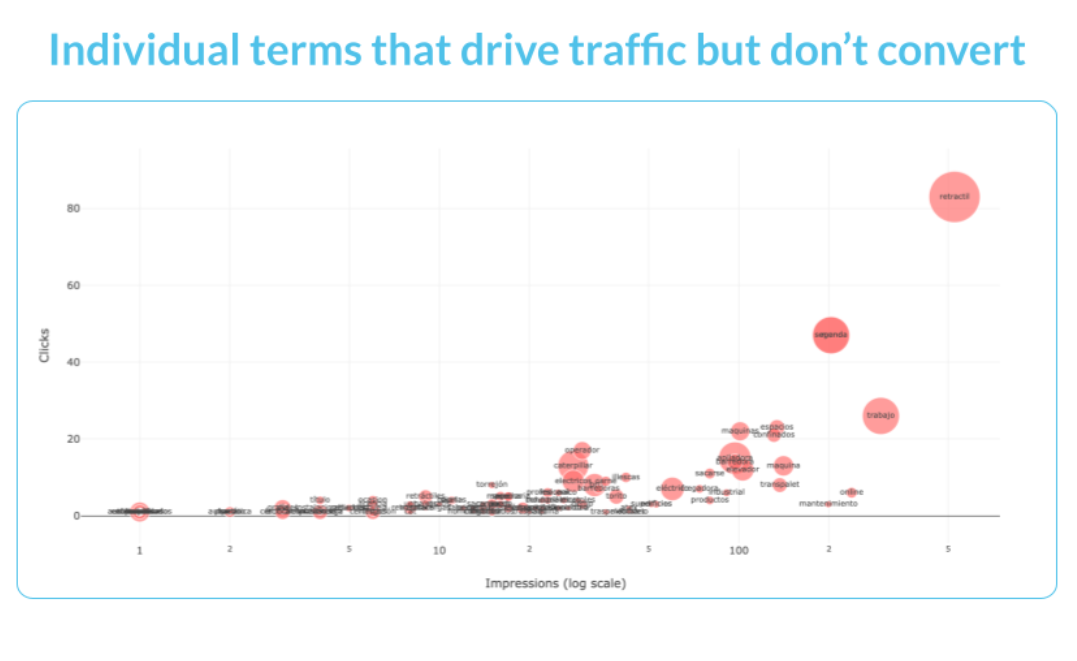
- "N-gram Analysis" where you can see every unique word of your Search Term report with its aggregated KPIs
- Quickly find search patterns
- Reduce your hidden spend in irrelevant terms
Why Cloud Words?
SEM Managers spend a lot of time reviewing Search Term Reports. These reports typically have thousands of rows (sometimes even over a million). Analyzing them offers many advantages:
- You get to see the actual searches users are making
- You identify KeyWords that are eating up your budget and are not relevant to you
- You discover concepts that perform well and weren't part of your KeyWord or AdGroup strategy

Search Terms
Analize at a global level which Search Terms are triggering your ads

Detect Patterns
Detect search patterns that remain undetectable in human analysis

Aggregated KPIs
Take decisions based on the aggregated KPIs around those search patterns

Only a fraction of your time
Achieve better results by dedicating only a fraction of your time.

Advantages of using Cloud Words
Search Term Analysis is a very important task in Google Ads. Cloud Words is already assisting many SEM Managers with their needs regarding this task, including:
- "It takes a lot of time to review"
- "It's an ongoing task because every month, 20% of the Search Terms are new which never occurred before"
- "It's imprecise because it's impossible to maintain concentration while reading something so long, cumbersome, and boring"
Solution
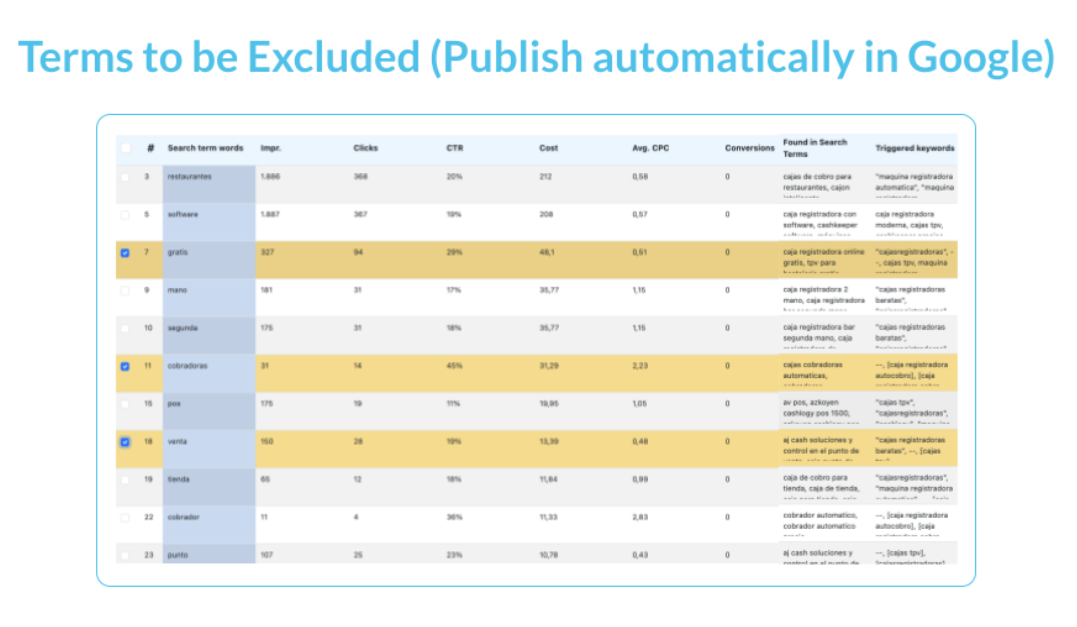
To make this task easier and faster, Dolnai has developed Cloud Words, which makes reading the Search Term report much faster, taking only 5% of the time you currently spend.

How does Cloud Words work?
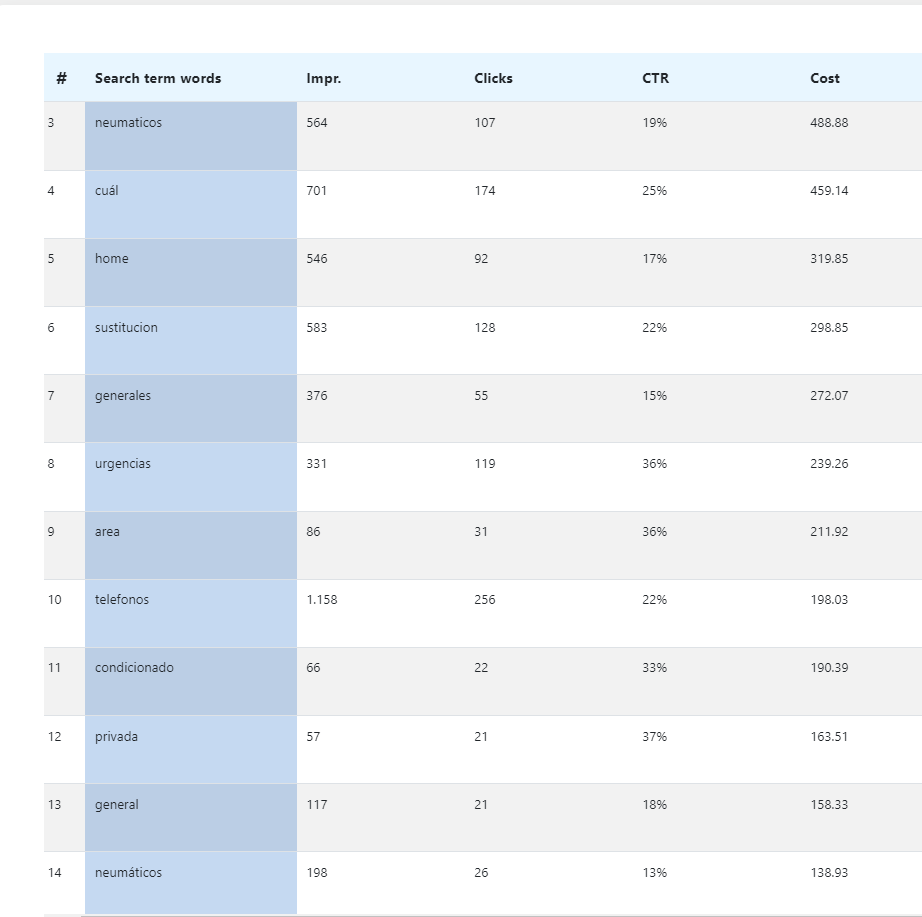
The Search Term report is broken down into unique words. In rows, you will see each word along with its KPIs and the searches and keywords triggered by these terms in order to better understand their context and the type of traffic each word is attracting.
.svg)